September 30, 2026
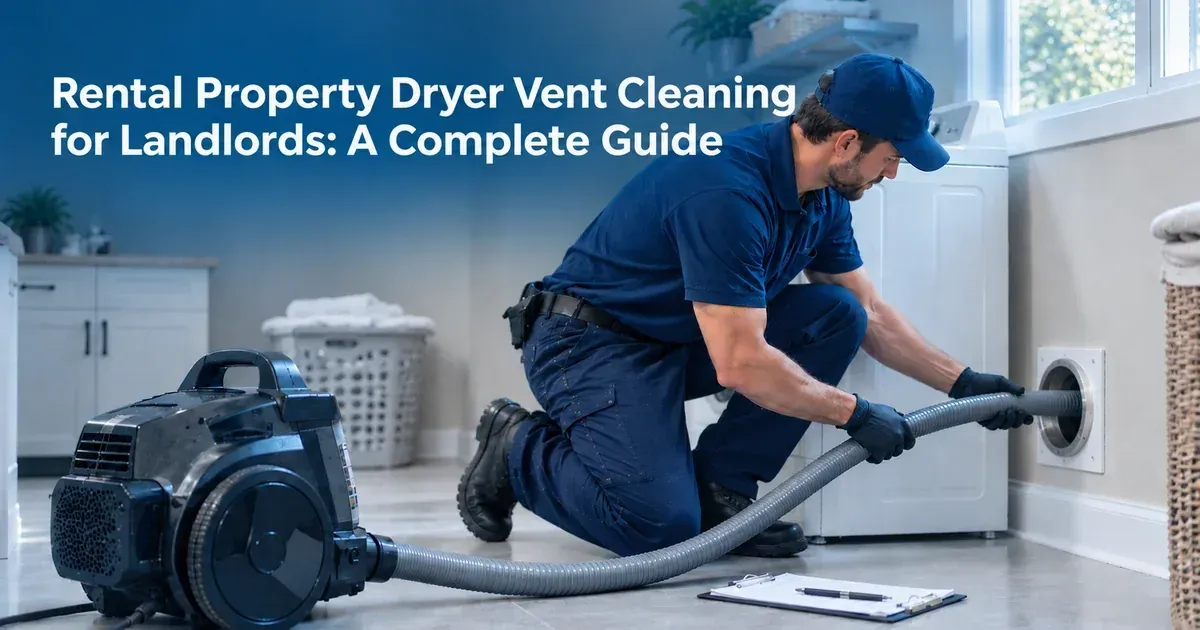
Rental property dryer vent cleaning for landlords is not just routine upkeep. It's a documented fire-risk control that insurers, courts, and fire codes increasingly expect owners to manage across every unit they own. If you own or manage rental housing, you're not protecting just one home, and you're answerable for every dryer vent behind every unit door on your lease roll, whether you visit that property weekly or once a year.
Here's the thing most single-family homeowner guides skip: liability multiplies with every door you manage, and scale changes everything. A missed cleaning at one townhome is an inconvenience, but the same miss across a 20-unit building with a shared laundry room becomes a very different conversation with your insurer, your attorney, and the local fire marshal's office once a claim gets filed against you.
Key Takeaways
- Landlord dryer vent fire liability depends heavily on documented maintenance, not just good intentions.
- Shared and commercial laundry rooms fall under stricter fire code requirements than a single-family dryer vent.
- A dated cleaning schedule is your strongest legal protection.
- Multi-unit dryer vent cleaning should scale with occupancy, dryer age, and vent run length, not a flat annual guess.
- Keeping service records, tenant notices, and inspection photos builds the due diligence trail insurers ask for.
- A property manager fire safety plan should treat dryer vents the same way it treats smoke detectors: scheduled, logged, and never skipped.
Why Dryer Vent Fires Create Real Liability for Landlords
What is dryer vent fire liability for a landlord? It is the legal and financial exposure a property owner carries when a preventable failure, like a lint-clogged dryer vent, contributes to a fire that damages a unit or injures a tenant.
Courts and insurers generally look at whether the failure was foreseeable and whether the landlord acted reasonably to prevent it in the months and years leading up to the incident, not just after. Landlord maintenance responsibilities generally include keeping fire-related systems in safe working order, and most leases and state landlord-tenant statutes echo that duty in fairly plain, unambiguous language.
The
U.S. Fire Administration (USFA) tracks residential fire causes nationwide, and according to USFA, clothes dryers are a recurring cause of home structure fires, with failure to clean the vent consistently flagged as a leading factor. That single finding reframes
dryer vent cleaning for landlords from a nice-to-have into a documented safety control every owner should track across the whole rental portfolio, not just one lone address.
The
National Fire Protection Association (NFPA) publishes clothes dryer safety guidance each year, and according to NFPA, lint buildup in the vent and duct itself, not just the lint trap inside the machine, is the primary ignition risk to watch for.
"Owners think the tenant's job is emptying the lint trap and the landlord's job stops there," says Justin Rowling, owner and ASCS-credentialed technician at Dirty Dog Carpet, Surface and Duct Cleaning. "The vent line running through the wall and out the exterior is a building system, and that is on the property owner."
Multi-unit dryer vent cleaning matters more with scale: a single clogged vent in a duplex risks one fire, while the same neglect across a 40-unit complex with shared chases lets one ignition point spread into several occupied units
Managing Rental Units in Winchester or Harrisonburg?
Get a portfolio-wide inspection quote for your rental units in Winchester, Harrisonburg, or anywhere nearby, before winter drying season hits and lint buildup becomes a bigger fire risk across every single door on your lease roll again this coming year.
Read More About: Could a Clogged Dryer Vent Cost You Your Home Insurance Claim?
How Do Fire Codes Treat Shared Laundry Rooms Differently?
Shared laundry room maintenance is not governed by the same rules as a single dryer tucked into a homeowner's closet, since common laundry rooms serving multiple units fall under stricter code provisions across most jurisdictions. The International Mechanical Code sets specific requirements for dryer exhaust duct length, material, and termination in multifamily and commercial installations, often stricter than single-family rules.
Commercial-capacity dryers move more air and produce more lint per cycle than a single residential unit, and a shared laundry room running six or eight machines all day builds lint faster than most homeowners realize.
Shared laundry room fire risk: multiple dryers venting into a common duct run increase lint accumulation speed, reduce individual accountability, and raise the stakes if ignition occurs since more tenants share the exposure.
Denise, who manages a 32-unit building in Winchester with one shared laundry room, moved to a quarterly cadence after her fire inspector flagged visible lint buildup during a routine walkthrough in early 2026. Her insurance renewal that cycle came in about 8 percent lower than the prior year, and her broker specifically credited the documented, quarterly maintenance log she'd started keeping just months earlier.
Setting a Cleaning Schedule Across Your Rental Portfolio
A reasonable rental property dryer vent cleaning schedule is not one date circled on a calendar. It scales with unit count, dryer age, and vent run length. A sensible interval by property type looks like this:
Single-family rentals with typical vent runs: annual, aligned with NADCA-informed guidance- Duplexes and triplexes with longer or bent vent runs: semi-annual
- Multi-unit buildings with shared laundry facilities: quarterly at minimum, tighter for older dryers or heavy turnover
This cleaning cadence works best when tied to lease turnover dates, giving you a natural, defensible checkpoint between tenants moving in and out.
Marcus owns six single-family rentals spread across Central Virginia and used to schedule cleaning "whenever I remembered," which in practice meant every two or three years between visits to each property. After switching every property to an annual service tied to each unit's lease renewal date, his portfolio hasn't had a single dryer-related maintenance call in eighteen months, and his overall repair spend dropped too.
Build a Portfolio-Wide Cleaning Calendar for Winchester and Harrisonburg
We help property managers set up recurring
dryer vent cleaning service across every unit you own in Winchester, Harrisonburg, or anywhere nearby, with scheduling that lines up automatically with each lease renewal date across the whole portfolio you manage.
Read More About: Dryer Vent Cleaning and Backpressure: Why Vents Slow Down
How to Document Due Diligence: A Four-Step Rental Checklist
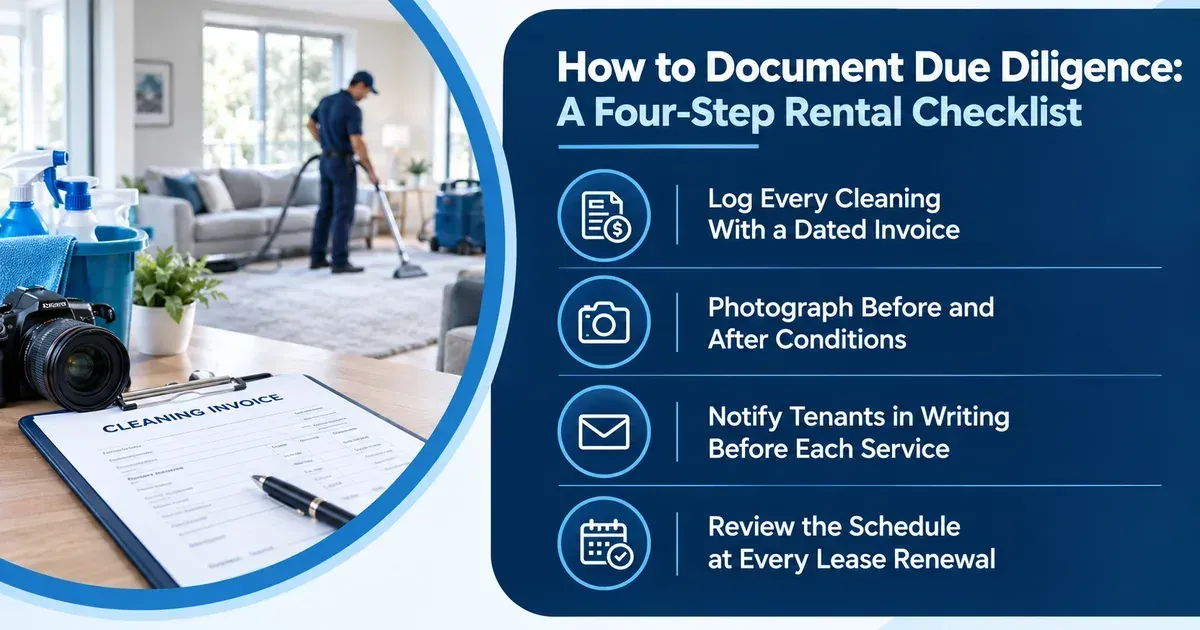
A landlord's maintenance duties are only as strong as the paper trail behind scheduled dryer vent service. If an investigator or adjuster ever asks what you did to prevent a fire, "we cleaned it sometimes" will not protect you or your business.
Not every invoice documents the same amount of work, and that gap matters for your liability case. A quick service that only clears the lint trap and the first few feet of duct isn't a full vent-run cleaning. A real cleaning covers the entire run, from the dryer connection out to the exterior termination point, not just the section that's easy to reach, and that's the standard your paperwork should actually reflect, invoice by invoice.
Step 1: Log Every Cleaning With a Dated Invoice
Keep every professional dryer vent cleaning invoice organized by unit address, not just by date. A shoebox of receipts will not help. A spreadsheet or property management software entry tied to each address will.
Step 2: Photograph Before and After Conditions
Ask your cleaning provider for before-and-after photos of the vent interior and exterior termination point. Pictures do not lie. Visual evidence of lint removal beats a one-line invoice description every time an insurer asks.
Step 3: Notify Tenants in Writing Before Each Service
Send a written notice to tenants before scheduled vent cleaning, even for common-area laundry rooms. It only takes a minute. That notice creates a timestamped record showing you actively manage the system rather than reacting only after complaints.
Step 4: Review the Schedule at Every Lease Renewal
Treat lease renewal as your trigger to confirm the unit's dryer vent service is current. This ties maintenance directly to occupancy changes and closes the gap that turnover periods often create between tenants.
What Happens Legally If a Dryer Vent Fire Starts Anyway?
Even with a strong maintenance program, fires can still happen, and it's worth being honest about what determines fault afterward. Liability typically hinges on documented steps, tenant misuse, and your specific lease terms. We're not attorneys, and every jurisdiction and lease agreement differs, so this isn't legal advice. Talk to your property insurer and a landlord-tenant attorney promptly, since state maintenance statutes vary and can shape how a claim resolves.
According to CPSC, dryer vent inspection and cleaning is a core fire-prevention step for homeowners and rental operators alike, alongside keeping the dryer area clutter-free and clear of stored items year-round.
Self-contained answer: A landlord who can show dated cleaning invoices, tenant notices, and a written schedule generally stands on much firmer ground than one who cannot produce any record, regardless of how the fire itself started.
"When we get called in after an incident, the property owners who fare best in the insurance conversation are the ones who kept records the whole time," says Justin Rowling, owner and ASCS-credentialed technician at Dirty Dog Carpet, Surface and Duct Cleaning. "The ones without records are stuck arguing intent instead of showing proof."
Read More About:
7 Signs Your Dryer Vent Needs Cleaning in Winchester VA Homes
Conclusion
Dryer vent cleaning for landlords is not a line item to skip when the budget gets tight. It's a documented safety control that protects tenants, buildings, and your standing with insurers when a claim is on the line. Multi-unit properties need their own schedule, separate from whatever cadence works for a single-family rental, because shared laundry rooms carry higher lint volume and stricter code rules than any one house.
Dirty Dog Carpet, Surface and Duct Cleaning helps property managers across Central Virginia protect every unit on their portfolio with documented, scheduled service, not a one-time fix booked after something's already gone wrong. At Dirty Dog Carpet, Surface and Duct Cleaning, technicians set up recurring service that fits your unit count, dryer age, and turnover schedule across the whole rental portfolio you currently manage.
You can
Contact Us Today to get your portfolio's cleaning calendar started this month, before the next lease turns over and another drying season puts every single rental vent system to the real test.
FAQs
Are landlords legally responsible for dryer vent fires in rental units?
Landlords generally must keep fire-related building systems reasonably safe, but exact liability depends on your lease, state law, and how well you documented maintenance.
How often should rental property dryer vents be cleaned?
Single-family rentals typically need annual cleaning, duplexes benefit from semi-annual service, and buildings with shared laundry rooms should schedule cleaning at least quarterly for safety.
Do shared laundry rooms need more frequent cleaning than single-family homes?
Yes, shared laundry rooms run more dryer cycles daily, generate lint faster, and fall under stricter fire code provisions than a single dryer vent in one home.
What documentation should a landlord keep to show due diligence on dryer vent maintenance?
Keep dated cleaning invoices per unit, before-and-after photos, written tenant notices, and a maintenance log reviewed at every lease renewal to build a defensible record.
Does landlord insurance cover dryer vent fire damage?
Coverage varies by policy and often depends on documented maintenance. Contact your insurance provider directly to confirm what your specific landlord policy covers.