July 27, 2026

A neglected dryer vent can get a Virginia homeowner's fire insurance claim denied. Insurers investigate the maintenance history behind dryer fires, and a vent that was never cleaned can be classified as wear and tear rather than a covered loss. Regular dryer vent cleaning services and a paper trail of receipts are what protect the claim.
Most homeowners assume a house fire is automatically covered once the policy is active. That assumption breaks down the moment an insurance investigator traces the fire back to a dryer vent packed with years of lint. If the investigator can show the buildup developed slowly and was never addressed, the claim can be treated as a maintenance failure rather than a sudden, accidental loss.
This guide covers why that distinction matters, what Virginia insurers actually look for, and the specific steps Winchester and Harrisonburg homeowners can take now so a dryer vent problem never turns into a denied claim.
Key Takeaways
- Insurance companies can deny a dryer fire claim if lint buildup is found to be a long-term maintenance issue rather than a sudden accident
- Dryer lint fires cause an estimated $236 million in annual property loss across the United States, with about 92% traced back to lint buildup
- Professional dryer vent cleaning cuts fire risk by roughly 65%, according to industry data cited by ConsumerAffairs
- Keeping receipts from professional dryer vent cleaning services is the clearest proof of maintenance if a claim is ever investigated
- Dirty Dog Cleaning provides free same-day estimates for dryer vent cleaning near me searches across Winchester and Harrisonburg
Why Insurance Companies Investigate Dryer Fires
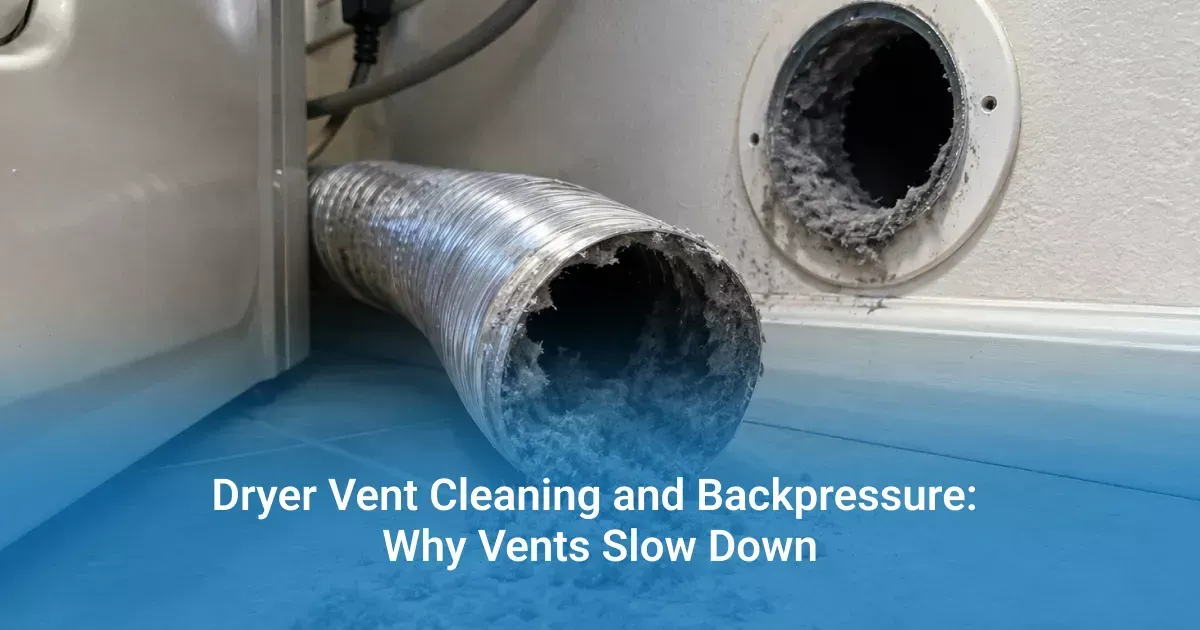
Homeowners insurance is built to cover sudden, accidental damage, not the slow consequences of skipped maintenance. When a dryer fire happens, the insurance company sends an investigator to determine the cause before approving the payout. If the investigator finds lint packed deep into the exhaust duct, that pattern points to months or years without cleaning rather than a one-time mechanical failure.
According to ConsumerAffairs' 2026 data on dryer fire statistics, lint accumulation causes roughly 92% of dryer fires, and failure to clean the vent is the leading cause overall. That single statistic is exactly what investigators are trained to look for once a fire has been contained.
Read More About:
7 Signs Your Dryer Vent Needs Cleaning in Winchester VA Homes
Don't Wait for a Fire to Find Out Your Vent Was Neglected
Our NADCA-certified technicians clear the full exhaust run and document the visit for your records
How a Clogged Dryer Vent Puts Your Claim at Risk
The financial exposure here is significant. Dryer lint fires are responsible for close to $236 million in property loss every year across the United States, and individual claims tied to a single incident can top $25,000 once structural damage, smoke damage, and personal property losses are added together.
Insurance expert Jeffrey Green, cited in InsuredBetter's breakdown of dryer fire coverage, notes that while dryer fires are usually covered under a standard homeowners policy, claims can be denied for lack of maintenance. That same article cites FEMA's U.S. Fire Administration data showing roughly 2,900 home dryer fires a year, causing over $35 million in property damage, with more than a third traced directly to failure to clean the dryer. If an insurer proves neglect contributed to the fire, they can deny the claim outright or increase future premiums even if part of the claim is paid.
This is where dryer vent cleaning services in Winchester stop being optional maintenance and start functioning as financial protection. A documented cleaning history is the difference between a claim that gets approved in weeks and one that gets contested for months.
What Insurance Adjusters Look for After a Dryer Fire
Insurance investigators follow a fairly consistent process after a dryer-related fire claim is filed.
Depth and age of lint buildup
Fresh lint from a single missed cleaning looks different from years of compacted buildup. Adjusters can often estimate how long a vent went unmaintained just from the density and location of the debris.
Vent material and installation
Flexible foil ducting traps roughly three times more lint than rigid metal ducting, and adjusters note whether the installation itself contributed to the risk versus pure neglect.
Any prior maintenance records
This is the single biggest factor a homeowner controls. Receipts from professional dryer vent cleaning on file, even from a year or two earlier, demonstrate active maintenance rather than years of neglect.
Manufacturer recall history
Adjusters also check whether the dryer itself was subject to any safety recalls, since a documented product defect shifts liability away from the homeowner entirely. Documentation on file, even something as simple as a Dirty Dog Cleaning service record, is what turns this checklist in a homeowner's favor.
How to Protect Your Claim Before Anything Happens
The National Fire Protection Association's research, cited alongside CPSC data, shows that cleaning the lint screen after every load cuts fire risk by about 90%, and professional dryer vent cleaning Winchester on top of that cuts risk by roughly 65% beyond what lint-screen cleaning alone achieves. Combining both habits is the strongest protection available to a homeowner, and it is also the paper trail an insurer wants to see.
Dirty Dog Cleaning has served Winchester and Harrisonburg for over 10 years and holds NADCA certification for full dryer exhaust vent cleaning, not just a quick lint-trap check. Every visit is documented, every technician is licensed and insured, and every homeowner searching dryer vent cleaning company options gets a free same-day estimate with no hidden fees.
If your vent has not been professionally cleaned in the past year, treat it as unfinished business, not a task for someday. The cost of a cleaning is a fraction of what a denied insurance claim costs a homeowner after a fire.
Protect Your Home and Your Claim
Book professional dryer vent cleaning services before lint buildup becomes a liability.
Conclusion
A clogged dryer vent is not just a fire risk, it is a financial risk that can leave a homeowner covering fire damage out of pocket if an insurer proves the buildup was years in the making. Regular dryer vent cleaning services, paired with the receipts to prove it, are the simplest protection available. If your Winchester or Harrisonburg home has not had a professional inspection recently, contact Dirty Dog Cleaning for a free same-day estimate and a documented service record for your files.
FAQs
Can my insurance claim really be denied over a dirty dryer vent?
Yes. If an investigator determines that long-term lint buildup, not a sudden mechanical failure, caused the fire, insurers can classify it as neglect rather than a covered loss and deny some or all of the claim. This is why maintenance records matter as much as the cleaning itself.
How often should I schedule dryer vent cleaning services?
Most homes need professional dryer vent cleaning once a year, though households that do frequent laundry loads or have long duct runs may need service every 6 to 9 months. Dirty Dog Cleaning recommends an interval based on your specific setup at every visit.
Does homeowners insurance ever cover dryer vent cleaning itself?
No. Routine maintenance like dryer vent cleaning is considered a homeowner responsibility, not a covered expense, the same way gutter cleaning or filter changes are not covered. Insurance only comes into play if a fire or other sudden loss actually occurs.
What proof do I need to show my dryer vent was maintained?
A dated invoice or service record from a licensed dryer vent cleaning company is the clearest proof. Dirty Dog Cleaning provides documented service records for every visit so homeowners have that history on file if it is ever needed.
Is professional dryer vent cleaning near me worth the cost?
Yes. Professional cleaning cuts fire risk by roughly 65% on top of routine lint-screen maintenance, and the average service costs far less than the deductible on a denied or contested fire insurance claim. It is one of the most cost-effective safety steps a homeowner can take.