
September 26, 2026

September and October give Winchester homes the best window for seasonal dryer vent cleaning, before furnace startup and holiday laundry raise the strain on a vent that coasted through summer unnoticed. Wait until December, though, and slow drying, warm laundry rooms, and higher fire risk arrive fast. Fall hands you a clean slate before two forces collide: a furnace sharing attic air, and a laundry pile that only grows.
Key Takeaways
- Fall, specifically September and October, is the natural reset point for dryer vent maintenance before the heating season and holiday laundry hit.
- A furnace or heat pump startup often shares attic or crawlspace air with your dryer's exhaust run.
- Holiday guests and extra linens can triple normal laundry volume in a single busy week.
- Cold air reduces airflow through a clogged vent and raises condensation odds inside the duct.
- A short fall checklist catches lint buildup early.
- Booking service in September or October beats waiting once cold weather fills the schedule.
Why Fall Naturally Resets Your Home Dryer Vent Schedule
Fall works as a natural reset for Winchester homes because summer humidity has just ended, and the furnace hasn't yet started drawing on that same crawlspace or attic air the dryer vent shares with it. That gap gives a technician a clean read on airflow before two seasonal changes collide. Not much time to waste. Booking a professional dryer vent service appointment in September beats a rushed call once cold weather fills the schedule.
"Homeowners call us in July about the air conditioning and forget the dryer vent completely," says Justin Rowling, owner and Air Systems Cleaning Specialist at
our Winchester crew. "By Thanksgiving, that vent has quietly lost airflow for months."
This kind of seasonal upkeep fits neatly into broader heating season home maintenance for Winchester households getting their whole heating and laundry systems ready for the coldest months of the year ahead of them.
Read More About:
7 Signs Your Dryer Vent Needs Cleaning in Winchester VA Homes
Why Does Heating Season Raise Your Dryer Vent Fire Risk?
Heating season raises dryer vent fire risk because furnaces, heat pumps, and dryer exhaust runs often share the same attic, crawlspace, or basement cavity, and both systems now generate heat in tighter, drier air than before. According to National Fire Protection Association data, clothes dryers and their exhaust vents are involved in thousands of home fires across the United States every year, with lint buildup a leading factor.
Dryer Vent Fires by the Numbers: The
U.S. Fire Administration puts the more conservative estimate at roughly 2,900 residential dryer fires a year, with about 5 deaths, 100 injuries, and $35 million in property damage tied to those incidents annually. NFPA's own tally runs far higher, closer to 13,820 dryer fires each year, since it captures a broader range of incidents than the USFA figure covers, so it's worth not blending the two counts together, since each one answers a slightly different question.
A vent running through an attic sees a real shift once insulation settles and a furnace begins cycling nearby it, which is why homeowners often schedule
air duct cleaning alongside the dryer vent visit each fall.
"The vent runs we worry about most are the ones sharing an attic with the furnace," says Justin Rowling, owner and Air Systems Cleaning Specialist at Dirty Dog Carpet, Surface and Duct Cleaning. "Once that furnace kicks on, the lint that sat quietly all summer suddenly has a heat source next to it." (Source: NADCA fire safety guidance, referenced in our
dryer vent inspection process)
Get Ahead of Heating Season This Fall
Book a NADCA-certified inspection now, before furnace startup and holiday laundry both land on the same overworked dryer vent run this fall season across Winchester and the surrounding Shenandoah Valley communities.
How Holiday Laundry Volume Overwhelms a Neglected Vent Fast
Guest linens, sports uniforms, and extra loads push cycle counts far past a household's normal weekly pace once relatives start arriving, and a vent that hasn't seen dryer vent maintenance since spring feels that strain fast. Maria, a homeowner in Winchester's Old Town neighborhood, hosts fourteen relatives every Thanksgiving and runs her dryer nonstop for four days. Last year her dryer took 58 minutes per load instead of 32, and the laundry room stayed warm all weekend.
Holiday Laundry Season Strain: A household running five or six loads a day during a holiday week generates roughly triple the lint volume of an average week. Days, not weeks. That's all it takes to turn a partially blocked vent into a fully restricted one. A fall inspection this September found nearly two years of packed lint near a bend in Maria's vent run, and her cycle times dropped back to 34 minutes once a technician fully cleared it out.
According to U.S. Consumer Product Safety Commission guidance, inspecting vents ahead of heavy-use periods is one of the simplest ways homeowners can cut fire risk during those busiest, laundry-heavy months of the year, and it's a habit that doesn't take more than a few minutes to build into a fall routine.
Why Does Cold Weather Make a Clogged Dryer Vent Worse Now?
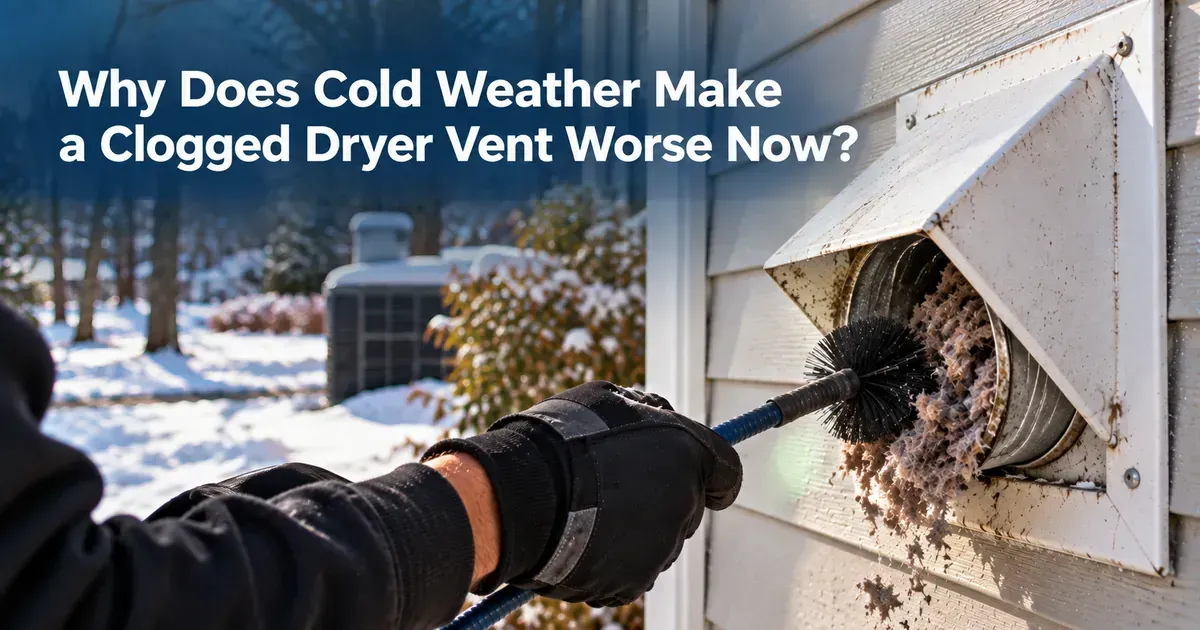
Cold outside air makes a partially clogged dryer vent worse because the temperature gap between warm, humid exhaust and cold duct walls encourages condensation right where lint has already narrowed the passage inside.
The Andersons on the west side of Winchester noticed their dryer shutting off twice per cycle for two winters running, always right after the season's first cold snap hit their neighborhood pretty hard.
A technician traced their problem to condensation forming around a 90-degree elbow eight feet from the exterior wall, a spot that dried out fine all summer but trapped moisture once temperatures dropped near freezing outside.
Read More About:
Dryer Vent Cleaning and Backpressure: Why Vents Slow Down
Your Fall Dryer Vent Checklist for Winchester Homeowners
A short checklist catches the two problems fall creates, dry-season lint buildup and cold-weather condensation, before either turns into a stressful service call. Work through these four steps before the first hard frost hits Central Virginia.
Step 1: Check the Exterior Vent Hood for Airflow Now
Run the dryer for five minutes and confirm strong, steady airflow at the exterior hood outside. Weak or intermittent airflow at this stage almost always points to lint buildup somewhere along the duct run rather than a failing dryer.
Step 2: Note Any Rise in Drying Time Since Last Spring
Compare a normal drying cycle today against how long the same load took back in May or June this year. An increase of ten minutes or more signals a vent that needs attention before holiday guests multiply the strain on it.
Step 3: Inspect Shared Mechanical Spaces Before Startup
Walk the attic, crawlspace, or basement area where your vent run passes near the furnace or heat pump equipment. Clear stored items and confirm the duct has not been crushed, kinked, or disconnected since last season's furnace tune-up.
Step 4: Schedule Professional Service Before Cold Days
Book a NADCA-certified cleaning in September or early October, ahead of both furnace startup and the holiday guest season arriving. This one appointment addresses lint buildup and lowers the condensation risk that colder weather introduces.
Ready for a Fall Vent Check?
Our technicians handle
dryer vent service in Winchester with a free same-day estimate and honest, no-pressure recommendations on every single visit we make to your home this fall season before the holidays.
When to Call a Professional Before Winter Weather Locks In
Call a professional once you notice longer drying times, a warm laundry room, or a musty smell near the dryer, since all three point to a vent run that only gets harder to service once winter weather settles in. According to ENERGY STAR, a clogged dryer vent can add ten to fifteen minutes to a single cycle and raise a household's energy costs across a whole heating season and well beyond it into spring.
Larger households and rental properties across Winchester and Harrisonburg feel this timeline pressure even more, since one service call has to cover a bigger vent run or a much more frequent cycle count, and it's easy for that gap to widen further once holiday guests and colder weather both arrive at once.
Read More About:
Why Winchester Homeowners Book Duct Cleaning Before Festival Season
Conclusion
Fall gives Winchester homeowners a rare window where dryer vent care stays simple, with no scrambling required, well ahead of the two biggest seasonal strains a home faces every year. A quick check of airflow, drying time, and shared mechanical spaces this September can spare a household slower laundry, higher bills, and needless fire risk come December, when schedules get busy fast.
No guesswork. Dirty Dog Cleaning helps Winchester homeowners handle both fall jobs with honest, NADCA-certified assessments on every visit, no matter the season or the size of the job at hand. At
Dirty Dog Carpet, Surface and Duct Cleaning, the same NADCA-certified team behind our air duct work also handles the vent run feeding your dryer, so one call covers both jobs before winter arrives.
Contact us today to get a free estimate and lock in your appointment before the fall schedule fills up across Winchester and the surrounding Shenandoah Valley during this busy holiday season right ahead.
FAQs
Is Fall Really the Best Season to Clean Your Dryer Vents?
Yes, September and October fall between summer humidity and the heating season startup, giving technicians a window before furnace use and holiday laundry increase strain on your vent system for sure.
How Does Furnace Startup Affect My Home Dryer Vent Run?
Furnaces and dryer vents often share attic, crawlspace, or basement space, so both heat up together each fall, and lint near that shared area raises fire risk once the furnace starts cycling for sure.
Can Cold Weather Really Make a Dryer Vent Problem Worse?
Yes, cold outside air causes warm, humid dryer exhaust to condense faster inside the duct, and that moisture mixes with lint to form a much denser clog than typical dry-season buildup usually creates.
How Much Extra Laundry Does the Holiday Season Really Add?
A household hosting guests can run five or six loads a day instead of the usual one or two, tripling lint volume within days and quickly overwhelming a vent that already carries some buildup for real.
What Signals Dryer Vent Trouble Before Winter Fully Arrives?
Drying times stretching ten minutes or more past normal, paired with a warm laundry room or musty smell near the dryer, both signal a vent needing professional attention before winter weather sets in.