May 23, 2026
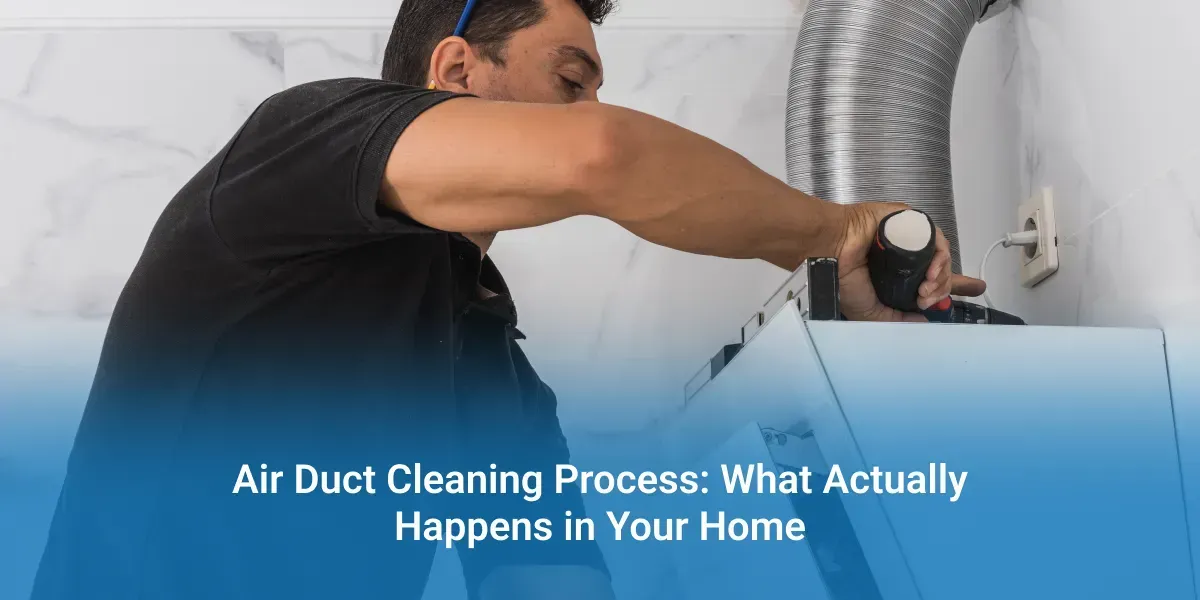
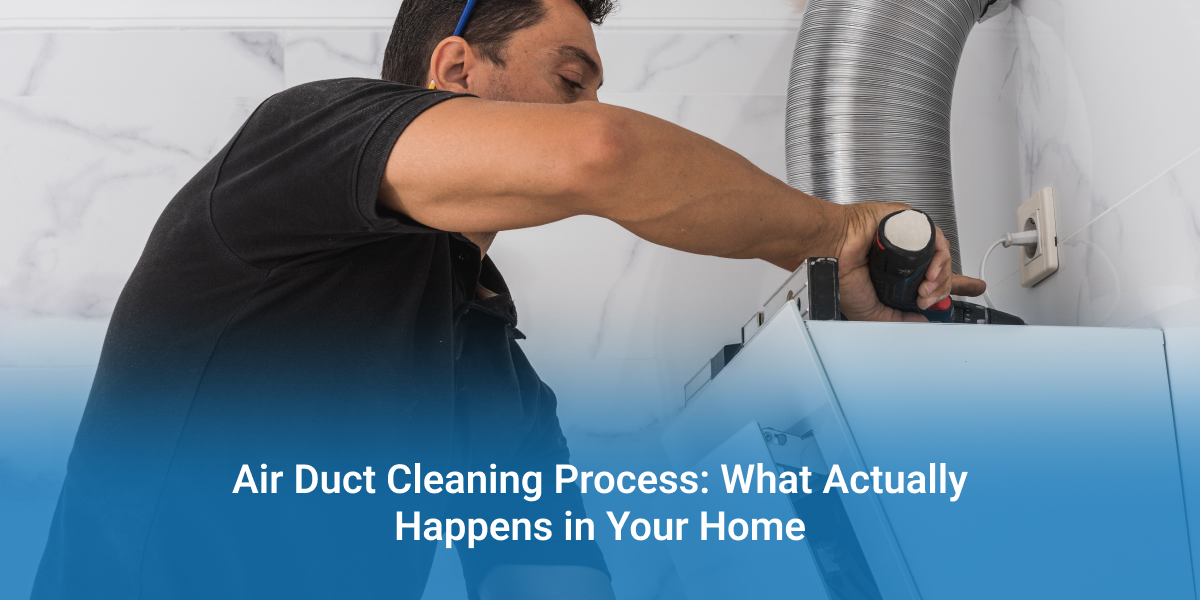
Air duct cleaning involves placing your entire HVAC system under negative pressure, then using rotating brushes, air whips, and compressed air tools to dislodge dust, debris, and contaminants from inside the ductwork. A powerful vacuum captures everything as it's loosened. The process covers ducts, vents, registers, return grilles, and furnace components - and typically takes 2 to 4 hours for a standard home.
Here's something most people in Winchester never think about: every time your heating or cooling system kicks on, air travels through ducts that may not have been touched in years.
Maybe decades.
That air picks up whatever's sitting in there - dust, pet dander, pollen, mold spores - and moves it straight into the rooms where you and your family breathe. And yet, when homeowners schedule air duct cleaning, they often have no idea what the technician actually does once they show up.
Is it just vacuuming a few vents? Do they take the whole system apart? How long does it take?
Good questions. All of them. And you deserve straight answers.
In this article, we're walking you through our exact process - step by step - so you know what to expect before we arrive, while we're working, and after we leave.
Key Takeaways
- Professional air duct cleaning covers your entire HVAC system - not just the visible vents.
- The process uses continuous negative pressure to pull contaminants out without spreading dust through your home.
- A full residential cleaning typically takes 2 to 4 hours depending on system size and buildup.
- NADCA-certified technicians follow a source removal method that dislodges and captures debris in one controlled pass.
- Homeowners in Winchester and Frederick County benefit most after renovation work, pet ownership, or going 3 to 5 years without service.
What is air duct cleaning?
Air duct cleaning is the process of removing accumulated dust, debris, allergens, and contaminants from inside your HVAC system - including ducts, vents, registers, return grilles, and furnace components. It involves specialized equipment that creates negative pressure to extract buildup without releasing it back into your living space. Done correctly, it improves indoor air quality and helps your system run more efficiently.
Read More About: 4 Ways Duct Cleaning Helps Lower Your Energy Bills
Why the Whole HVAC System Gets Cleaned - Not Just the Ducts
Most people picture air duct cleaning as vacuuming out a few metal tubes. That's not quite it.
Your HVAC system is one connected network. Air moves through supply ducts, return ducts, registers, grilles, the air handler, the blower motor, and furnace components - all in one continuous loop. If you clean the ducts but leave the registers dirty, or clean the vents but leave the air handler coated in dust, contaminants just get pulled back in and redistributed.
That's why the National Air Duct Cleaners Association (NADCA) - the industry's governing body - specifically recommends cleaning the entire HVAC system as a unit. We're NADCA-certified, so that's exactly what we do.
For homeowners in Winchester and the surrounding Frederick County area, this matters more than you might think. Virginia's four-season climate means your HVAC works year-round. Summers are humid. Springs bring heavy pollen. Winters kick the furnace into regular use. That year-round demand accelerates buildup inside the system.
Think of it like this. You wouldn't wash only half your dishes and call the kitchen clean.
What areas do we clean during an HVAC system cleaning?
We clean every component that air touches during normal operation:
- Supply ducts (the ones that push conditioned air into rooms)
- Return ducts (the ones that pull air back to be heated or cooled)
- Supply and return registers and grilles
- Air handler and blower motor housing
- Furnace components including heat exchangers
- Coils and drain pans where accessible
If it's part of the path air travels, it gets cleaned.
Step-by-Step: What Our Technicians Actually Do
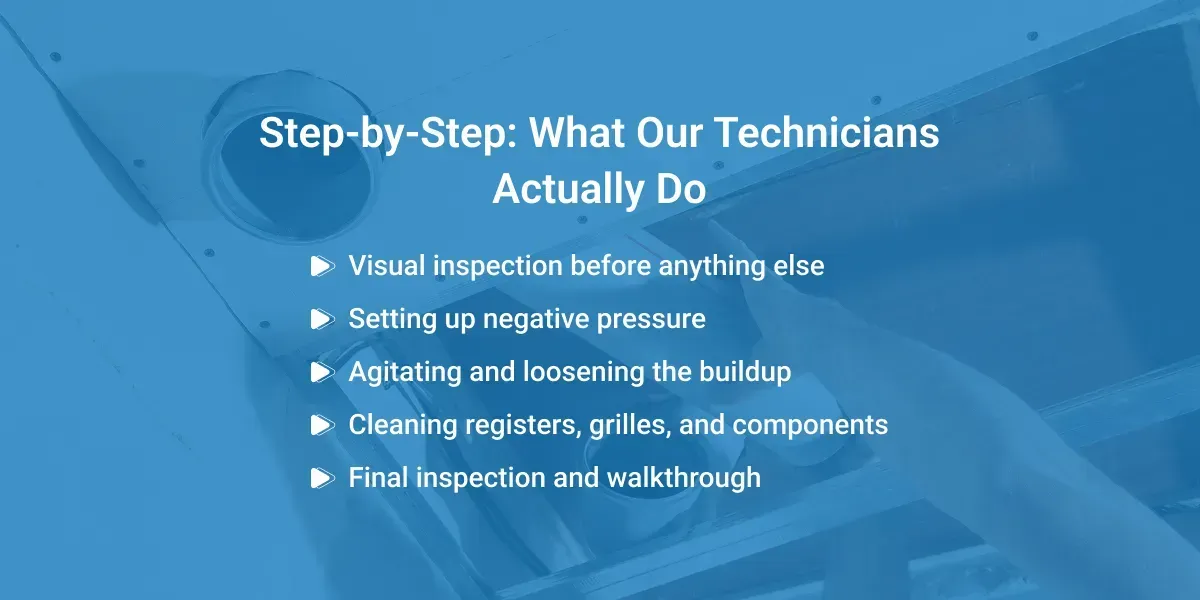
So what does the visit look like from start to finish? Here's exactly how we work.
Step 1 - Visual inspection before anything else
We start with a walk-through. Our technician checks your vents, looks at the condition of accessible ductwork, and identifies any areas with visible mold, moisture, pest activity, or heavy buildup. This tells us what we're dealing with before equipment goes anywhere near your system.
It also protects you. If we spot something that needs attention beyond cleaning - a disconnected duct, signs of moisture intrusion - we'll flag it and explain what we found.
Step 2 - Setting up negative pressure
This is the part that separates a real cleaning from a "blow and go" job.
We connect a powerful vacuum to your duct system and put the entire network under continuous negative pressure. What that means in practice is that nothing we dislodge during cleaning can escape into your home. The vacuum pulls everything toward the collection unit the whole time we're working.
Without this step, you'd end up with dust floating around your living room. That's not cleaning - it's just moving the problem somewhere else.
Step 3 - Agitating and loosening the buildup
Once the system is under negative pressure, our technicians go duct by duct using a combination of:
- Rotating brushes that scrub the interior surfaces
- Air whips that spin and knock debris loose
- Compressed air tools that blast buildup off hard-to-reach surfaces
We work methodically through each supply and return duct. Every run gets cleaned, not just the ones near the unit.
Step 4 - Cleaning registers, grilles, and components
While the ducts are being cleared, we also clean the registers and return grilles - the visible vent covers in your rooms. These trap a surprising amount of dust and pet dander.
We also clean the air handler, blower motor housing, and accessible furnace or AC components. This is the part that most "cheap duct cleaning" companies skip entirely.
Step 5 - Final inspection and walkthrough
Once everything is done, we walk the system again. We check that all registers are properly reseated, confirm the system looks clean, and let you know what we found during the service. If anything came up during the job - a disconnected joint, visible moisture - we'll tell you clearly.
How is NADCA-certified cleaning different from standard cleaning?
NADCA certification requires technicians to follow the ACR (Assessment, Cleaning, and Restoration) standard - a specific documented process for HVAC cleaning. Certified companies use source removal methods, meaning contaminants are physically removed rather than just disturbed. Uncertified "blow and go" operators often use handheld vacuums that lack the power to do this properly. We've been NADCA-certified for over 10 years serving Winchester, Frederick County, and the surrounding Virginia region.
Read More About: Ways Duct Cleaning Helps Lower Your Energy Bills
What Equipment We Use and Why It Matters
Not all duct cleaning equipment is the same. The difference between a proper job and a waste of money often comes down to the tools.
Here's what we bring to every job:
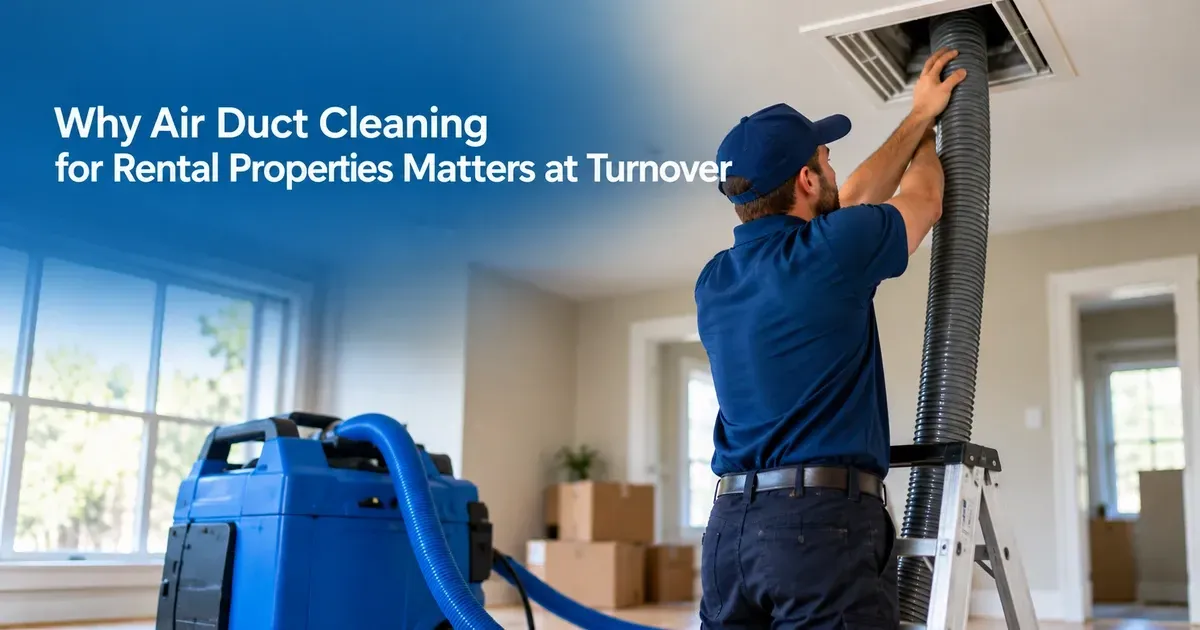
High-powered negative pressure vacuum system
We use truck-mounted or large portable vacuum units capable of generating the sustained suction needed to capture fine particles. Household shop vacuums don't come close to this. The collection unit stays outside or in the truck, meaning debris goes directly there - not into your home.
Rotary brush systems
These attach to flexible rods and spin inside the ductwork to physically scrub surfaces. They work like a drain snake, reaching deep into runs that compressed air alone can't clean thoroughly.
Compressed air tools and air whips
Compressed air at the right pressure dislodges debris that's stuck to duct walls. Air whips are flexible attachments that spin and beat the interior surfaces as they travel through, loosening fine dust and particulate matter.
HEPA-rated collection
The vacuum collection system is filtered to capture very fine particles, including mold spores, dust mite debris, and microscopic pollen. This matters particularly for allergy sufferers in Frederick County and Winchester homes where spring pollen counts run high.
A Proper Cleaning Covers More Than Just the Vents
We clean the full HVAC system using NADCA-certified methods designed to remove buildup safely and thoroughly.
How Long Does the Process Take?
For most homes in the Winchester and Frederick County area, a full professional hvac duct cleaning takes 2 to 4 hours. Larger homes, systems with heavy buildup, or properties that haven't had service in many years can take longer.
Here's a rough guide:
| Home Size | Estimated Time |
|---|---|
| Under 1,500 sq ft | 1.5 to 2.5 hours |
| 1,500 to 2,500 sq ft | 2.5 to 3.5 hours |
| 2,500 to 4,000 sq ft | 3.5 to 5 hours |
| Large homes or heavy buildup | 5 hours or more |
A few things that can extend the job:
- Multiple HVAC units (common in two-story homes)
- Heavy pet hair and dander buildup in the ductwork
- Post-renovation debris from drywall dust or construction
- Systems that haven't had hvac maintenance service in 5 or more years
We'll give you a realistic time estimate before we start. No surprises.
Is there anything I should do to prepare my home before the technician arrives?
A few simple things help the job go smoothly. Clear the area around your vents so our technicians can access them easily. If you have pets, it's worth keeping them in a separate room while we work - not because of safety concerns, but because the equipment is loud and some pets find it stressful. Make sure someone is home for the full duration. We'll need access to vents in every room plus your utility area or basement where the air handler is located.
What You Should Do Before and After Your Service
A little preparation on your end helps us do a better job - and helps you get more out of the service.
Before we arrive:
- Clear furniture or boxes away from vent locations so we can access them without moving heavy items
- Make sure your HVAC system is accessible - utility rooms, attic access panels, crawl space entries
- Replace your air filter right after the service, not before (we'll often recommend this anyway)
- Note any rooms where airflow seems weak or where dust collects faster than others - that's useful information for us
After the service:
- Install a fresh air filter within 24 hours. This is important. A clogged filter undoes a lot of the benefit of a clean system.
- Run your system for an hour or so and check that airflow feels consistent across rooms
- Check your registers are fully open in rooms you want conditioned
- Contact us within 72 hours if anything seems off - unusual smells when the system runs, registers that seem restricted, anything that doesn't feel right
Following regular hvac maintenance habits - changing filters every 60 to 90 days, keeping vents unobstructed - extends the life of a professional cleaning significantly.
How often should Winchester homeowners have their air ducts professionally cleaned?
NADCA recommends professional air duct cleaning every 3 to 5 years for most households. But in practice, Winchester and Frederick County homeowners may benefit from more frequent service if they have pets, allergy sufferers in the home, a recent renovation, or a system that's been running for several years without any hvac maintenance. If you moved into a previously owned home and don't know when the ducts were last cleaned, it's worth getting it done regardless of the timeline.
Want to Know What Your System Actually Looks Like Inside?
We’ll inspect your ductwork, explain what we find, and recommend only the cleaning your home truly needs.
Conclusion
Here's what it comes down to.
Air duct cleaning isn't a mystery. It's a documented, methodical process that - when done right - makes a real difference to the air your family breathes and the efficiency of your HVAC system.
We put your system under negative pressure. We work through every duct, register, and component with the right tools. We don't skip anything. And we leave you with a clear picture of what we found and what we did.
If you're in Winchester, Frederick County, Harrisonburg, or anywhere across Central Virginia and you're not sure when your ducts were last properly serviced, now's a good time to find out. We offer free same-day estimates and we're available Monday through Friday.
Give us a call or text at (540) 203-9019, or request your free estimate online. We'll take it from there.
FAQs
Does air duct cleaning actually work, or is it just a sales pitch?
It works when it's done correctly with proper equipment. The key word is "correctly." A legitimate HVAC duct cleaning uses negative pressure and mechanical agitation to physically remove contaminants. Studies and homeowner reports consistently show improvements in indoor dust levels and HVAC airflow after professional cleaning. Where it fails to deliver results is when companies use underpowered equipment or skip major components of the system. We follow NADCA standards on every job, which means source removal - not just surface-level contact.
How do I know if my Winchester home needs air duct cleaning?
A few clear signs to watch for: visible dust or debris blowing from vents when the system starts, allergy or respiratory symptoms that seem worse indoors than outside, musty or stale smells when the heating or cooling runs, recent renovation work, or it's been more than 3 to 5 years since your last professional duct cleaning services. If you've recently moved into a home in the Winchester or Frederick County area and don't know the service history, that's reason enough to have it checked.
What's the difference between hvac cleaning and just changing the air filter?
Changing your air filter addresses what's entering the system from the return side. It captures particles before they reach the blower and heat exchanger. But it doesn't clean what's already built up inside the ductwork over years of use. Think of the filter as preventive maintenance going forward and air duct cleaning as dealing with the accumulation that already happened. Both matter. Neither one replaces the other.
Does Dirty Dog Cleaning serve areas outside Winchester?
Yes. We serve Winchester, Harrisonburg, Frederick County, and a wide range of surrounding communities including Stephens City, Kernstown, Woodstock, Middletown, and many others across Central Virginia and parts of West Virginia. If you're searching for reliable cleaning services near me and you're in the Shenandoah Valley region, there's a good chance we cover your area. Check our serving area page or call us to confirm.
How does furnace duct cleaning fit into the overall service?
Furnace duct cleaning is part of our full system cleaning. The furnace side of your HVAC handles heat distribution, and those components - heat exchangers, blower motor, accessible furnace ducts - collect just as much debris as the cooling side. We don't skip them. A complete hvac systems service covers both the heating and cooling sides of your system in the same visit.